NGC 4038 & 4039
✩
NGC 4038 & 4039 ✩
COSMIC EMBRACE
This painting of two galaxies entangled for over 100 million years, came to life as the paint seemed to dance on the canvas. The story of the Antennae Galaxies can be beautifully likened to the mythical love story of Orpheus and Eurydice-a love that transcends the boundaries of life and death but is fraught with longing and inevitable loss. For 100 million years, these galaxies have been locked in a transformative and tumultuous embrace, their attraction reshaping their fate. This cosmic collision will end with the merging of their nuclei forming one colossal elliptical galaxy or the death of one. It is a cosmic Shakespearean love story.
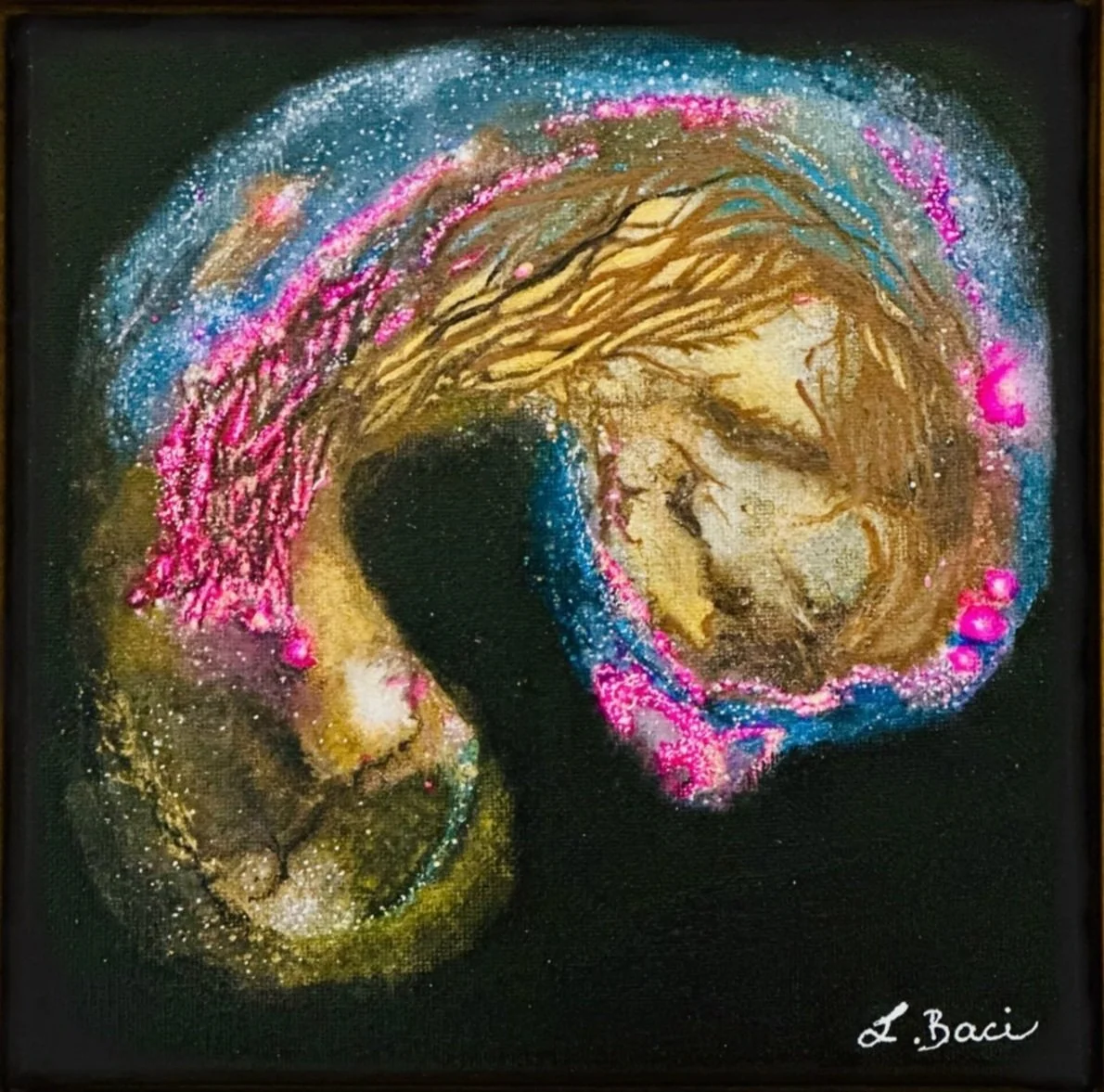
COSMIC ROSE Acrylic on Canvas 12 x 12 x 11/16 in. (30.5 × 30.5 × 1.8 cm) $500.00
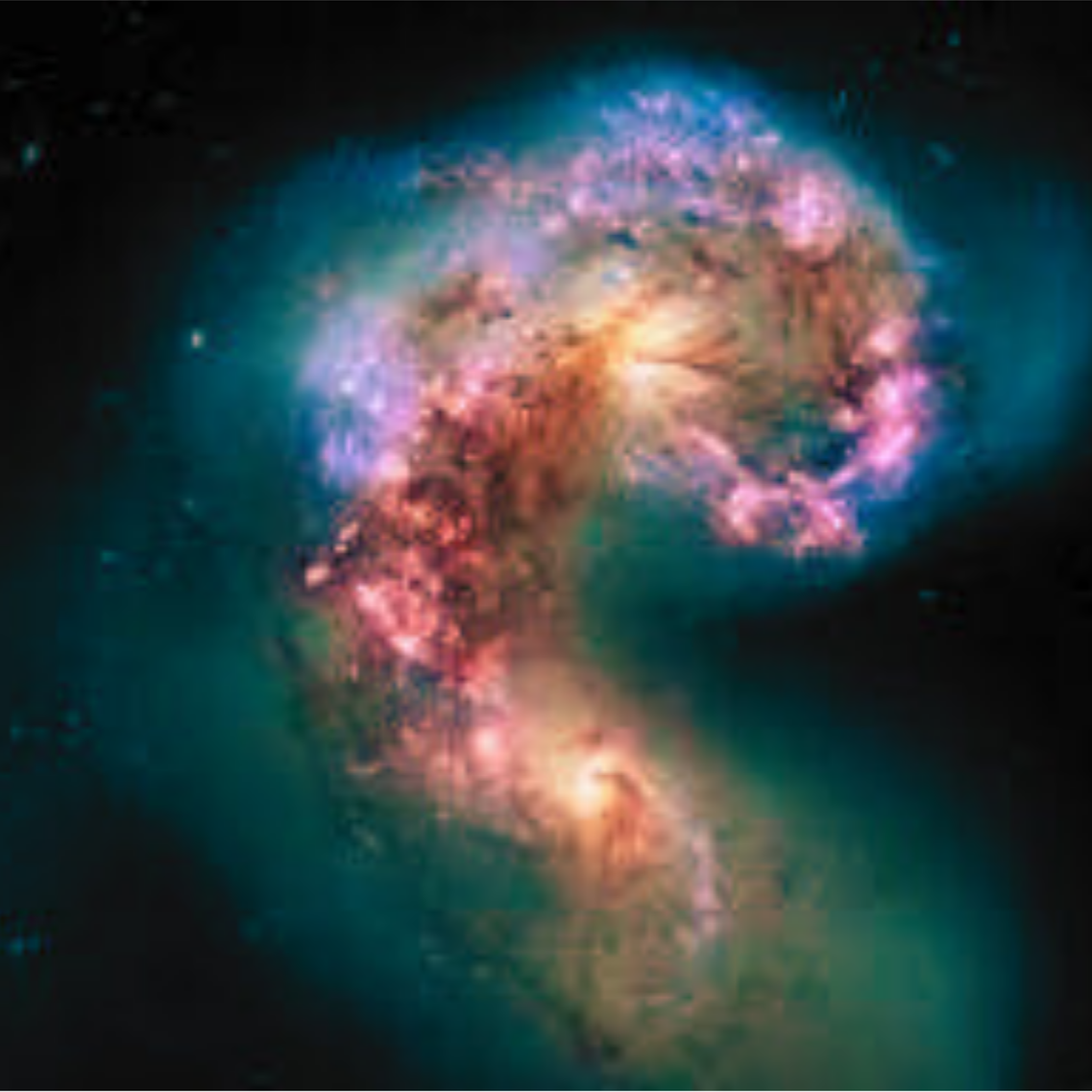
Hubble Space Telescope has captured stunning images of the Antennae Galaxies (NGC 4038/4039), a pair of colliding spiral galaxies forming long "antennae" from tidal tails, revealing intense starbursts, dust lanes, and bright, young star clusters in vivid pinks and blues, offering a preview of our own Milky Way's future collision with Andromeda. These images show gas compression, massive star formation, and the chaotic beauty of galaxies merging, creating a spectacular cosmic fireworks display.
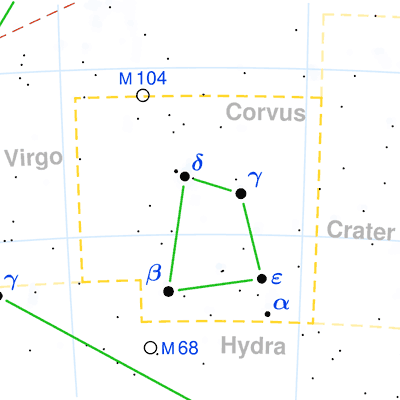
Corvus is one of the 48 constellations identified by the astronomer Ptolemy in the second century. Its name means “crow” in Latin. It is an ancient constellation that was known since the time of the Babylonians. They saw it as a raven, and it was sacred to Adad, the god of rain and storm. To the ancient Greeks, it was a crow sent by Apollo to fetch water. The raven wasted his time eating figs. After returning late, Apollo punished him by throwing him into the heavens. He was also condemned to endure eternal thirst. This is why the crow caws instead of singing like other birds.
NGC 4038 and NGC 4039 are a pair of interacting galaxies known as the Antennae Galaxies and the Ringtail Galaxy. These two galaxies are colliding with each other, distorting their original shapes. NGC 4027 is a barred spiral galaxy located approximately 83 million light years from Earth. NGC 4361 is a large planetary nebula with a shape similar to that of an elliptical galaxy. These objects are extremely dim and can only be seen in large telescopes, in the Corvus constellation.
Galatic Location: Corvas Constellation
Celestial Phenomenon: NCG 4038 & NCG 4039
Collection: 88 Constellations