Elephant's Truck Nebula (IC 1396A)
✩
Elephant's Truck Nebula (IC 1396A) ✩
TRUNK OF STARS
The “Elephant's Trunk Nebula” (IC 1396A) gets its name because its dark, dense cloud of gas and dust, sculpted by nearby stars, forms a shape resembling an elephant's head and long, curved trunk when viewed in visible light, showing a bright, sinuous rim against the background glow of the region in space.

TRUNK OF STARS Acrylic on canvas 12 x 12 x 11/16 in. (30.5 × 30.5 × 1.8 cm) $500.00
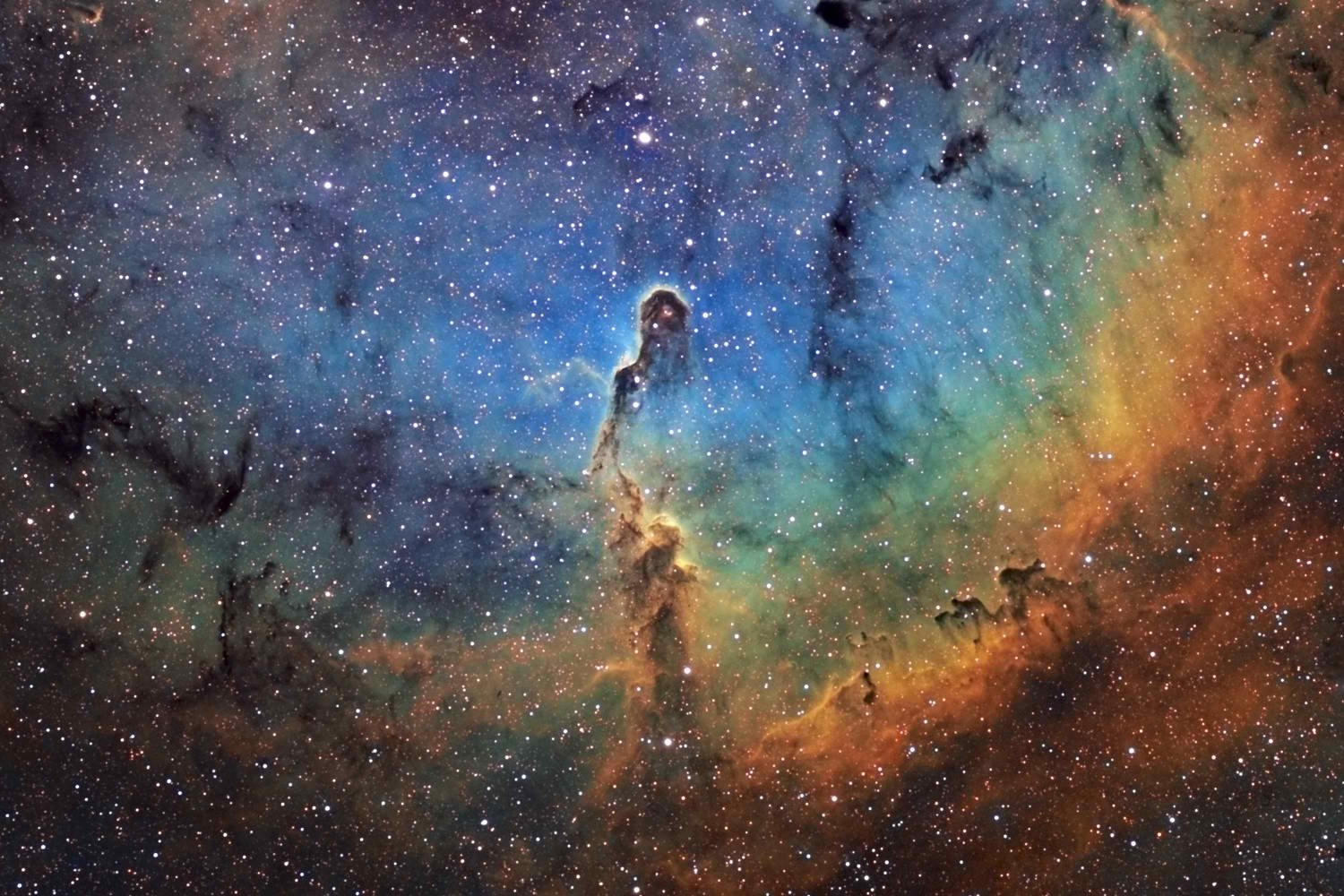
Captured bu NASA: Hubble Space Telescope IC 1396A 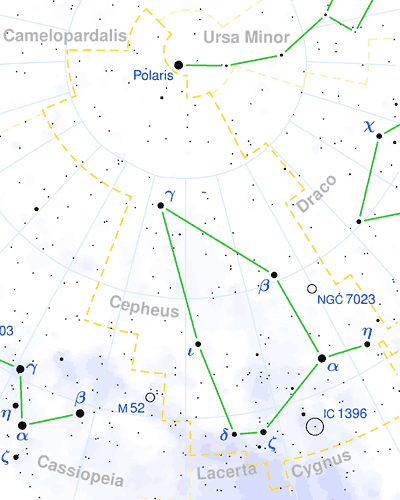
The large and relatively faint emission nebula IC 1396 is more than 100 light years across. The Elephant’s Trunk itself stretches over a region of 20 light years. The dark globule is eroded by the radiation pressure from the central star that illuminates the nebula.
Cepheus is one of the 48 constellations identified by the Greek astronomer Ptolemy in the second century. It was named after the king of Ethiopia. Cepheus was the husband of Cassiopeia and the father of Andromeda. All three are immortalized in the night sky as constellations. It is said that Zeus placed him among the stars after his death because he was descended from the nymph Io, who was one of Zeus’ favorites. Cepheus is usually depicted as a robed king with a crown of stars. He stands with his left foot placed over the pole and his scepter extended towards his queen, Cassiopeia.
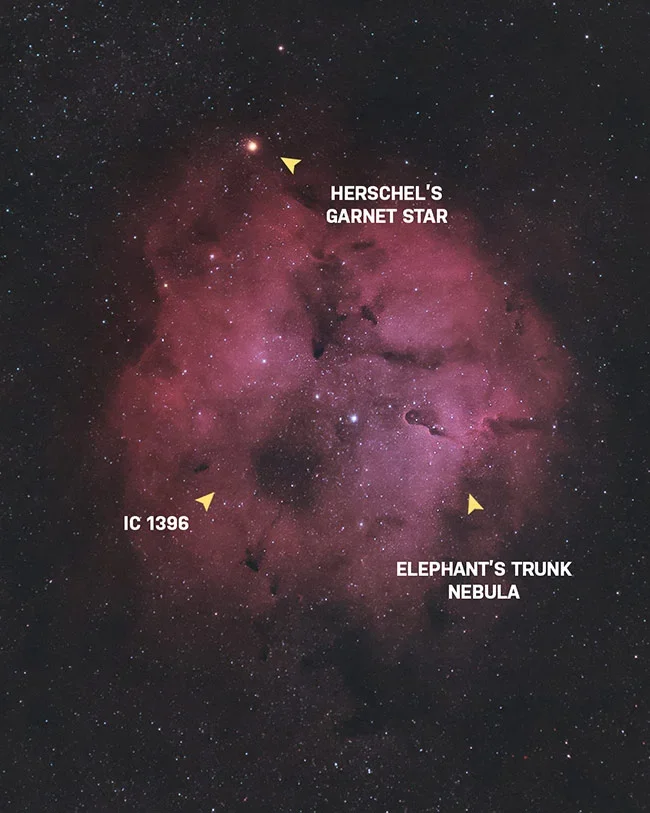
Just like stars are born from the collapse of dense matter, human growth often comes from intense, inward collapse — periods of grief, loneliness, or questioning. In the "darkness" of these moments, new aspects of ourselves are born. Just like radiation from nearby stars shapes the nebula, external pressures sculpt our identity. Sometimes it feels destructive, but it's also what shapes us into something uniquely beautiful. Parts of the nebula are destroyed so that stars can form. Similarly, parts of us: faded dreams, outdated beliefs, relationships may "erode" so that new versions of ourselves can come into existence.
Cosmic Location: Cepheus Constellation
Celestial Phenomenon: IC 1396
Collection: 88 Constellations