NGC 602
✩
NGC 602 ✩
Inner Works
In the distant Small Magellanic Cloud, the young bright cluster of newborn stars NGC 602,
It mirrors the early Universe—where only the simplest elements existed, and new stars continued to form.
Like the stars, we are always evolving—shaped by time, experience, and unseen forces.
The stars remind us: we are always expanding, unfolding and revealing.
Pause. Embrace your becoming.

Image from NASA - James Webb Space Telescope

INNER WORKS. Acrylic on canvas 24 × 24 x 1.5 in. (30.5 × 30.5 × 3.8 cm) $1,250.00
The James Webb Space Telescope has observed NGC 602, revealing new insights into its structure and star formation. This image captures life constantly forming, expanding, and recycling—just like art, which allows us to witness creation, beauty, and transformation in both darkness and light.

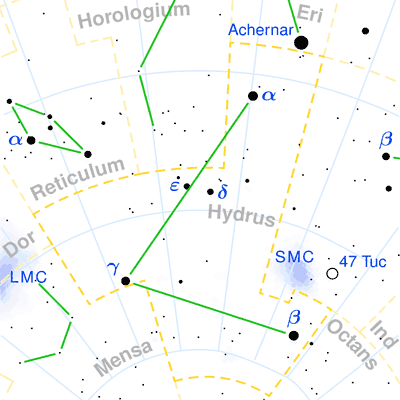
The Magellanic Clouds (both the Small and Large Magellanic Clouds) have been included in the lore of native inhabitants in the Southern Hemisphere, such as South Sea islanders and indigenous Australians. European sailors, including those during Ferdinand Magellan's circumnavigation, used the Magellanic Clouds for navigation, calling them the "Cape Clouds”.
There is no mythology associated with Hydrus. The constellation is located so far south that it was not visible to the ancient Greeks or Romans. It was mapped by Dutch navigators and represents the sea snakes they would have encountered on their voyages. It first appeared on a celestial globe published by Dutch astronomer Petrus Plancius in 1597 and was one of twelve constellations included in Johann Bayer’s star atlas in 1603. It is often confused with Hydra, the much larger constellation farther north.
Cosmic Location: Hydrus Constellation
Celestial Phenomenon: NGC 602
Collection: 88 Constellations